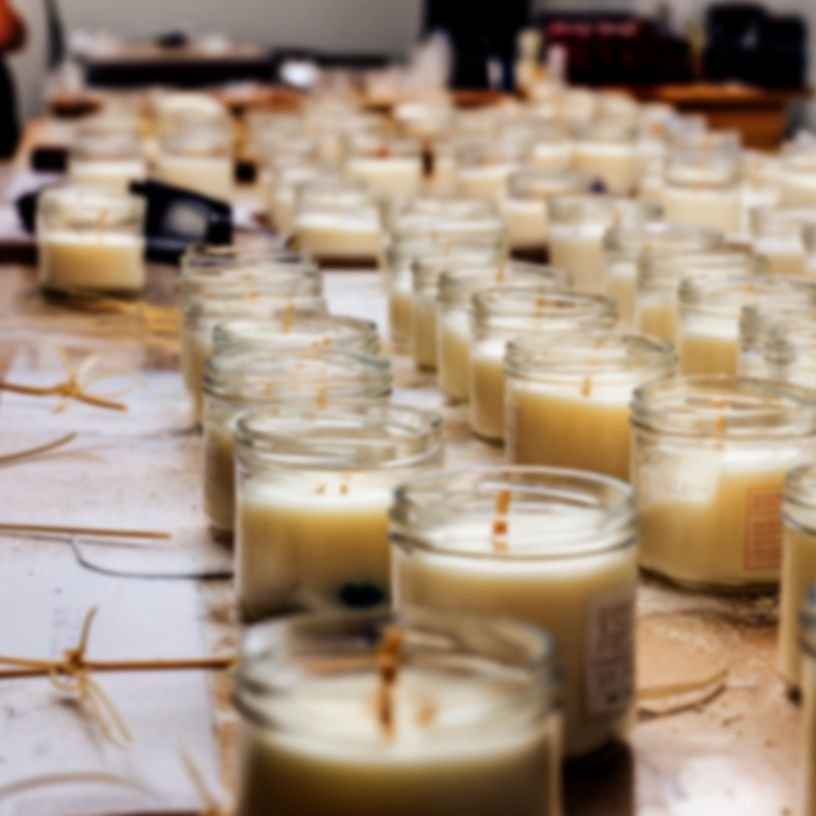
The wick controls the rate of combustion. A larger wick pulls more melted wax up to the flame, creating a larger melt pool, more heat, and stronger scent throw. A smaller wick does the opposite. The goal is a full melt pool, liquid wax reaching the edges of the vessel, within 2 to 4 hours of burning, without overheating the jar or producing soot.
Get it right: full pool, clean burn, strong throw, no black smoke. Too large: mushrooming, soot, excessive heat, possible jar cracking. Too small: tunneling, wasted wax, weak throw.
Wicks are grouped into series. Within each series, higher numbers mean larger wicks and stronger burn.
The specific series matters less than the principle: stay within one family during testing and adjust up or down by number until you find the right burn.
Before you select a wick, measure the inside diameter of your vessel. Not the ounce count, not the height: the distance across the opening at the widest point where the wax sits. A "10 oz" candle means nothing for wick selection; an 80mm internal diameter tells you everything. Manufacturers publish sizing by internal diameter. Start there, then test. Our wick size calculator turns your diameter, wax, and wick family into a starting size plus the test set around it.
Pour at least three test candles: the size you think is right, one larger, one smaller. Cure appropriately (48 hours minimum for soy, 72 to 96 for coconut blends). Then:
Document every test. The goal is repeatable results across multiple burn sessions, not just the first light.
Vessels wider than 3.5 inches (about 90mm) often need two wicks for a full melt pool; three become necessary above 4.5 inches. Position them evenly: for two wicks, one third and two thirds across the diameter. Test the combination the same way you'd test a single wick.
Higher loads make melted wax less viscous, which changes how the wick draws fuel. A wick that works at 6% may need to go up a size at 10%. Always test at your actual intended load; establish it first with the fragrance load calculator.
Straight-sided vessels burn more predictably than tapered or flared ones, and thick-walled glass retains heat differently than thin. If you switch vessels, treat it as a new wick test even at a similar diameter.
A candle that tunnels or soots isn't just a product problem; it's a brand problem. A customer who gets a tunneled candle doesn't come back. One who gets a clean full pool every time becomes a repeat buyer and tells people about you. Wick testing is not optional. It's the work. The Six Figure Wick ebook covers wick selection in depth, including the families that perform best with coconut apricot blends and how to document your results.
Keep reading: browse all guides, or put the numbers to work in the free calculators.
Sign up and receive our free candle pricing cheat sheet, plus one useful note from the studio each week. Unsubscribe anytime.