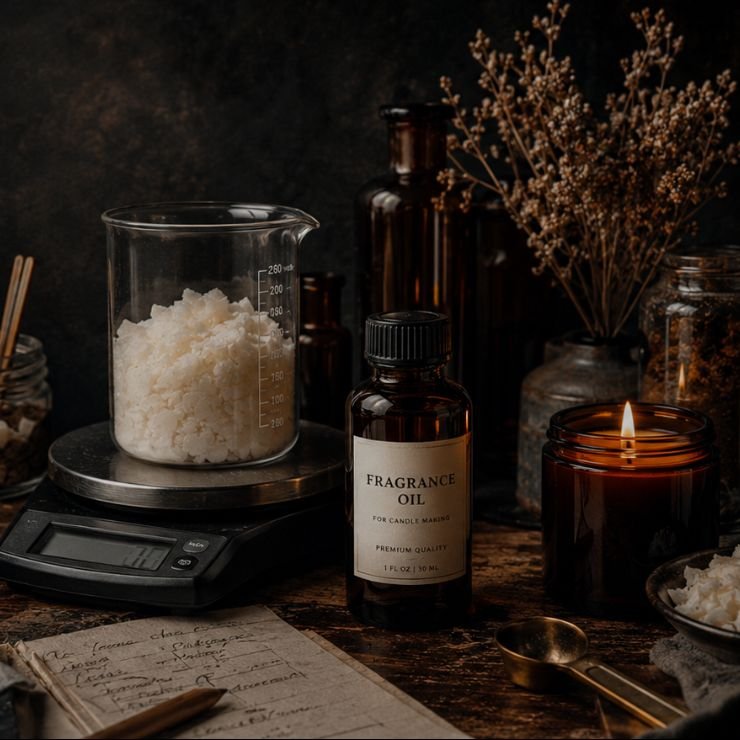
Fragrance load is one of the most important factors in candle making because it directly affects how strong your candle smells, how well it burns, and how safe it is to use. Too much fragrance oil and your candle may not burn properly; too little and the scent throw will be weak and disappointing.
In this guide, you'll learn exactly how to calculate fragrance load for candles, step by step, using simple formulas and real examples.
Fragrance load is the percentage of fragrance oil used in relation to the total wax weight. A 10% fragrance load means 10% fragrance oil and 90% wax. Different waxes have different maximum loads, so understanding this concept is essential for safe, effective candle making.
Getting the load right is critical for strong scent throw (hot and cold), proper burning performance, preventing sweating or oil leakage, safety and wax stability, and consistent product quality. Ignore it and your candles may burn unevenly, smell weak, or become unsafe to use.
Always check your wax manufacturer's recommendation before deciding.
Fragrance oil = wax weight × fragrance load %. And wax plus fragrance equals your total candle weight.
Example: 200g.
Say 8%.
200g × 8% = 16g fragrance oil.
200g − 16g = 184g wax.
Final result: 184g wax, 16g fragrance oil. A balanced formula.
A 500g candle at 10% load: 50g fragrance oil, 450g wax. Strong scent without hurting burn quality.
A properly balanced candle has a strong cold throw, releases fragrance evenly when burning, burns cleanly without residue, and has a smooth surface with no oil separation. If any of these fail, adjust your percentage.
Manually calculating loads gets confusing when scaling recipes. Our free fragrance load calculator gives instant accurate measurements, avoids human error, and keeps every batch consistent.
Most candles use between 6% and 10% depending on wax type.
Not always. Exceeding wax limits can cause burning issues and oil leakage.
Possible reasons include low fragrance load, poor quality oil, or incorrect curing time.
Yes, higher loads can slightly affect burn time and wax stability.
Keep reading: browse all guides, or put the numbers to work in the free calculators.
Sign up and receive our free candle pricing cheat sheet, plus one useful note from the studio each week. Unsubscribe anytime.