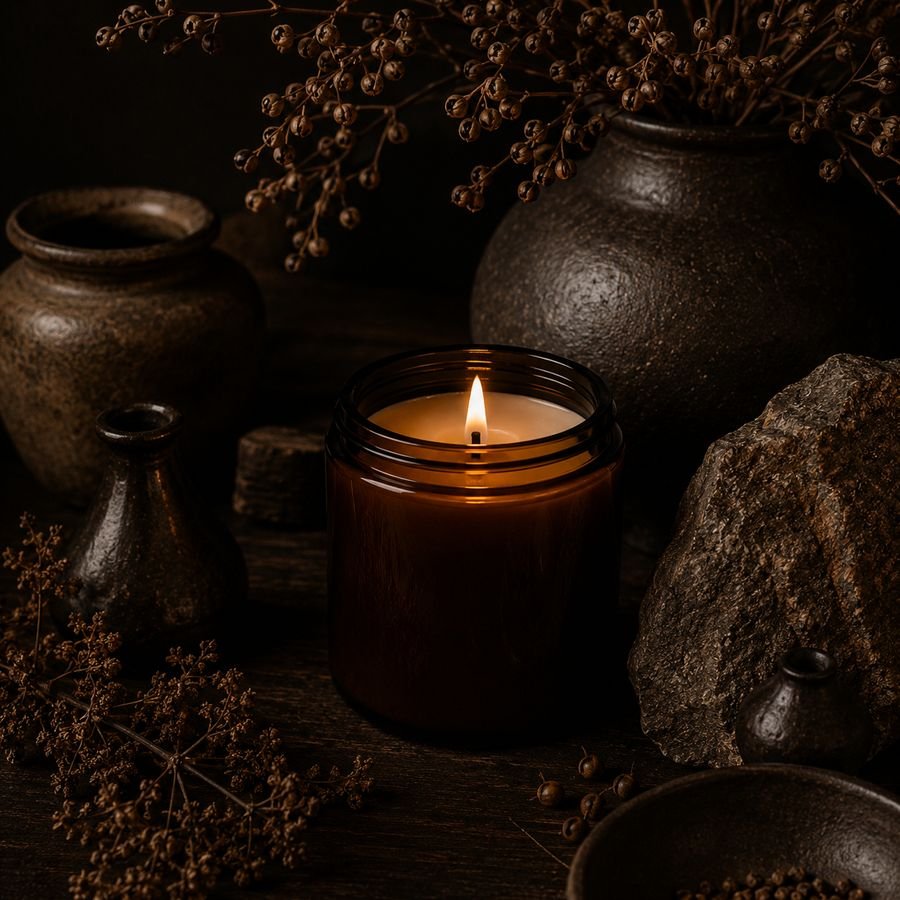
Candle burn time is one of the most important factors for both makers and customers. It directly affects product value, customer satisfaction, and pricing strategy. Burn too quickly and customers feel shortchanged; burn too slowly or unevenly and it signals a formulation problem.
Burn time is the total number of hours a candle will burn before it's fully used up. It's affected by wax type, wick size, fragrance load, jar size, and burning conditions.
Burn time plays a key role in pricing your candles correctly, setting customer expectations, improving product quality, and competing in the market.
Burn time = total wax weight ÷ burn rate (grams per hour), where burn rate depends on the wax and wick combination.
Example: 200g.
200 ÷ 6 = about 33 hours.
Wick size: too large burns faster; too small gives a weak flame. Wax type: soy burns slower, paraffin faster. Fragrance load: high loads can slightly reduce burn time. Jar diameter: wider jars may burn unevenly.
Even with formulas, real burn time varies. Always test the first burn cycle (2 to 4 hours), run a full burn test, and try multiple wick sizes.
Our free burn time calculator estimates burn time instantly for your wax and wick setup, shows an honest range, and gives you a safe number to put on the label. Pair it with the wick size calculator to get the wick right first.
Divide total wax weight by the burn rate per hour.
Most candles burn between 20 and 50 hours depending on size.
Usually the wrong wick size or a fast-burning wax.
Keep reading: browse all guides, or put the numbers to work in the free calculators.
Sign up and receive our free candle pricing cheat sheet, plus one useful note from the studio each week. Unsubscribe anytime.