Ten free calculators The ebook, $27 The Wick Garage waitlist is open

Wax types

Three proven container formulations, one for each stage: a forgiving soy starter, an enhanced soy tuned for throw, and a coconut apricot blend for premium lines.

Starter soy

A forgiving first jar. Stability and predictable testing over maximum scent.

8–9% load · beginner

Enhanced soy

Soy forward, tuned for stronger hot throw without giving up the clean burn.

9–10% load · intermediate

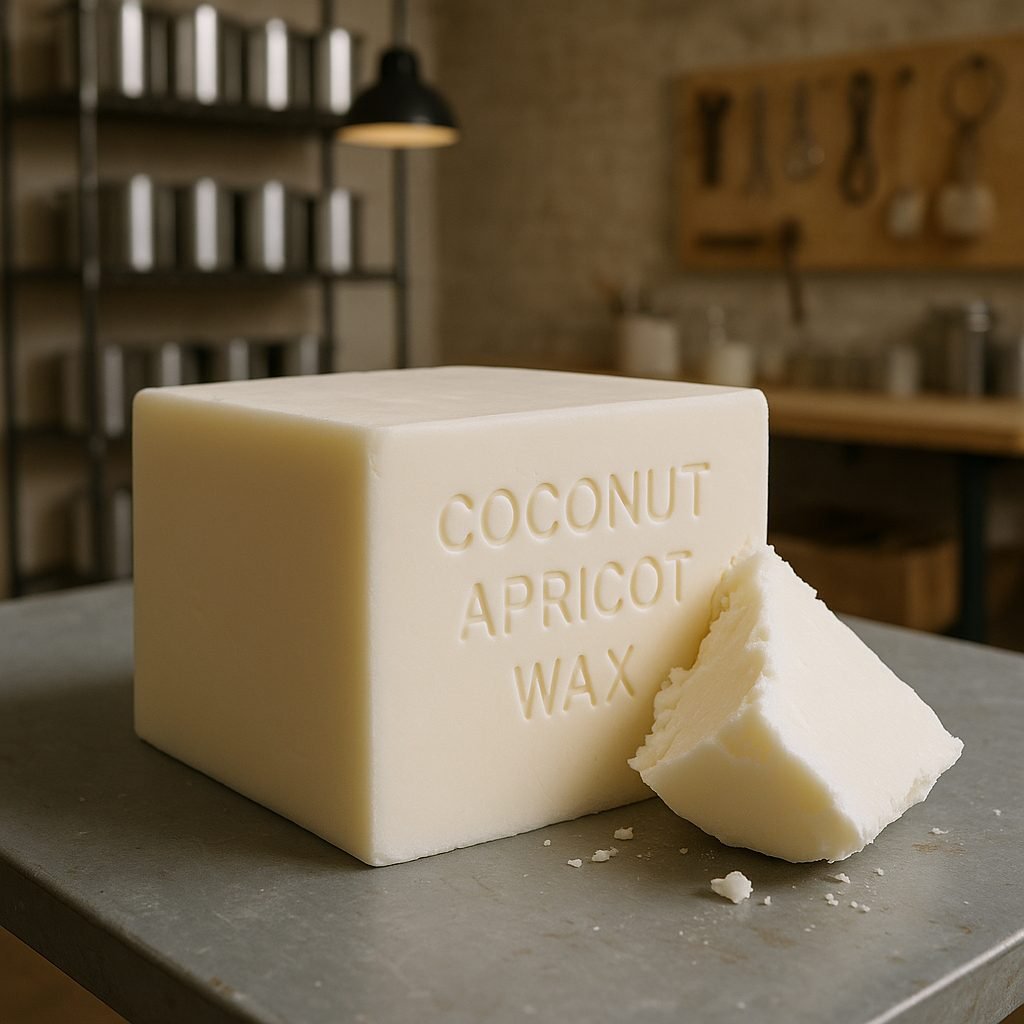
Coconut apricot

Creamy premium blend. Flawless tops, slow even burn, strongest projection.

9–11% load · advanced

Choosing between them

All three formulations share the same single-wick container structure; what changes is the wax system, the fragrance load it can safely carry, and how much testing experience it assumes. Start where your skills are, not where your ambitions are. A starter soy candle you have fully tested beats a premium blend you have not.

Starter soy
8–9% load · 2.5″–3.25″ vessels · learning burn structure
Enhanced soy
9–10% load · 2.5″–3.25″ vessels · stronger throw, same simplicity
Coconut apricot
9–11% load · 2.75″–3.5″ vessels · premium finish and projection
Vessel options for a first soy container candle

Starter soy

The starter formulation gives container candle makers a dependable baseline using widely available U.S. container wax options. It prioritizes stability, clean burn structure, and predictable testing behavior rather than pushing maximum scent load too early. It works especially well when you are learning how your wax, wick, and vessel interact for the first time, and it establishes a repeatable foundation that makes later upgrades easier and more controlled.

Use this structure if you are

  • Testing your first container candles
  • Working with straight-sided jars
  • Learning wick sizing behavior
  • Establishing a repeatable baseline
  • Building your first sellable candle structure

Skip this structure if you are

  • Testing wide-mouth vessels
  • Building multi-wick candles
  • Pushing fragrance loads above 10%
  • Working with coconut-apricot blends
  • Developing a premium retail line

Formula at a glance

Container wax
Soy-based container wax designed for jar candles
Baseline ratio
Wax 91–92% · Fragrance oil 8–9%
Wick strategy
Single wick matched to vessel diameter
Vessel range
2.5″ to 3.25″ internal diameter

Expected performance

  • Even melt pool formation within the first two to three burns
  • Moderate hot throw strength
  • Stable flame height and controlled jar temperature
  • Minimal mushrooming
  • Smooth or lightly textured surface finish after cooling

Process

  1. Fully melt wax according to supplier handling guidance.
  2. Add fragrance oil inside the recommended incorporation temperature range. Stir slowly and consistently.
  3. Allow wax to cool into the recommended pouring range before transferring into prepared vessels.
  4. Let candles rest undisturbed for at least 24 hours before moving.
  5. Allow adequate cure time before evaluating scent performance.

Adjust wick size first if

  • The melt pool forms too slowly
  • The flame appears undersized
  • Hot throw feels weak during early burns

Adjust fragrance load later if

  • Burn structure remains stable
  • Container temperature stays controlled
  • The wick remains clean after repeated testing
Shop the supplies for this recipe

The four supplies this starter formula is built around.

Soy container waxThe 91–92% base of the recipe
Shop
Fragrance oilFor an 8–9% load. Forgiving, beginner-friendly scents
Shop
Wick assortmentTest sizes for a 2.5–3.25″ single-wick jar
Shop
Straight-sided jarsThe vessel format this formula is tuned for
Shop

Some links are affiliate links. They cost you nothing and help keep every tool on this site free. Disclosure.
Enhanced soy hot throw

This formulation improves scent projection while preserving the clean burn behavior, accessibility, and familiarity that make soy container wax a reliable foundation. It is especially useful for makers preparing candles for small retail environments, local markets, and early-stage product launches where material simplicity still matters. Treat it as the performance upgrade from the starter structure.

Use this structure if you are

  • Working with soy container wax
  • Seeking stronger hot throw from a soy-only structure
  • Transitioning beyond beginner fragrance loads
  • Improving scent performance for retail candles
  • Building a dependable mid-tier product line

Skip this structure if you are

  • Testing your first container candles
  • Still learning wick sizing behavior
  • Working with wide-diameter vessels
  • Building coconut-apricot candle systems
  • Pushing fragrance loads above stable soy limits

Formula at a glance

Container wax
Soy-based container wax designed for single-wick jars
Baseline ratio
Wax 90–91% · Fragrance oil 9–10%
Wick strategy
Single wick matched carefully to vessel diameter and load
Vessel range
2.5″ to 3.25″ internal diameter

Expected performance

  • Stronger hot throw than baseline soy formulas
  • Consistent melt pool development across early burns
  • Stable flame height and controlled container temperature
  • Light surface texture typical of soy systems
  • Reduced fragrance suppression during cure

Process

  1. Fully melt wax according to supplier handling guidance.
  2. Add fragrance oil within the recommended incorporation range. Stir slowly and consistently.
  3. Allow wax to cool into the recommended pouring range before filling vessels.
  4. Let candles rest undisturbed for at least 24 hours.
  5. Allow adequate cure time; soy systems often improve after several days of stabilization.

Adjust wick size first if

  • The melt pool forms too slowly
  • The flame appears undersized
  • Hot throw feels weaker than expected

Adjust fragrance load later if

  • Burn structure remains stable
  • Container temperature stays controlled
  • The wick stays clean across repeated tests
Shop the supplies for this recipe

The four supplies behind this high-throw soy formula.

Soy wax (hot-throw capable)Holds a higher fragrance load without sweating
Shop
High-load fragrance oilThe fuel for maximum hot throw
Shop
Wick assortmentSize up to feed a stronger melt pool
Shop
VesselsSingle-wick containers for controlled testing
Shop

Some links are affiliate links. They cost you nothing and help keep every tool on this site free. Disclosure.

A coconut apricot luxury candle with a smooth creamy top

Coconut apricot luxury

The coconut apricot formulation is designed for makers who want stronger scent projection, smoother surface finish, and a more refined burn profile than standard soy systems typically provide. It supports premium container candles intended for retail presentation, gift lines, and brand-forward collections, and is best used once a stable burn structure has already been established.

Use this structure if you are

  • Building a premium container candle line
  • Working with coconut-apricot container wax
  • Seeking the strongest hot throw of the three
  • Improving surface finish consistency
  • Preparing candles for retail or wholesale

Skip this structure if you are

  • Still learning wick sizing fundamentals
  • Testing your first container candles
  • Working in very narrow-diameter jars
  • Prioritizing lowest-cost material systems
  • Testing unfamiliar fragrance oils

Formula at a glance

Container wax
Coconut-apricot blend designed for single-wick vessels
Baseline ratio
Wax 89–91% · Fragrance oil 9–11%
Wick strategy
Single wick matched to vessel diameter and wax type
Vessel range
2.75″ to 3.5″ internal diameter

Expected performance

  • Stronger hot throw than standard soy systems
  • Smooth, creamy surface finish after cooling
  • Stable flame height across burn cycles
  • Full melt pools with improved finish in range vessels
  • Often improves further after extended cure

Process

  1. Fully melt wax according to supplier handling guidance.
  2. Add fragrance oil within the supplier's recommended incorporation range. Stir slowly and evenly.
  3. Allow wax to cool into the recommended pouring range before filling vessels.
  4. Let candles rest undisturbed for at least 24 hours.
  5. Allow extended cure time; coconut-apricot systems often improve after several days.

Adjust wick size first if

  • The melt pool forms too slowly
  • The flame appears undersized
  • Hot throw feels weaker than expected

Adjust fragrance load later if

  • Burn structure remains stable
  • Container temperature stays controlled
  • The surface stays smooth after cooling
Shop the supplies for this recipe

The four supplies that define this luxury blend.

Coconut-apricot waxThe creamy, premium base of the blend
Shop
Premium fragrance oilComplex, retail-grade scents worth the vessel
Shop
Wick assortmentCoconut blends often size up, so test a range
Shop
Luxury vesselsShow off a clean, glassy pour
Shop

Some links are affiliate links. They cost you nothing and help keep every tool on this site free. Disclosure.

Use these formulas with

Fragrance load calculator Jar fill calculator Batch scaling calculator Wick size calculator

Get free tools

Sign up and receive our free candle pricing cheat sheet, plus one useful note from the studio each week. Unsubscribe anytime.